IA · Juridique
How can Jev apply to the legal field?
Jev, the TypeSafe AI model that makes decisions instead of generating text: speed, cost, dynamic choices, and use cases in the legal field.

Introduction
TypeSafe AI, founded by Diofo Almeida, a former OpenAI researcher, officially launched its AI Jev on September 15. It caused a huge buzz on social media. In this note, I will share the areas where I think Jev could be used within the legal branch to combine technology and law.
What is Jev?
For those who have never heard of Jev, it is a new AI whose workings differ greatly from known LLMs. This AI applies the adage Less Is More by using a minimalist approach that gives it tremendous speed and cost efficiency.
Explanation
Classic LLMs
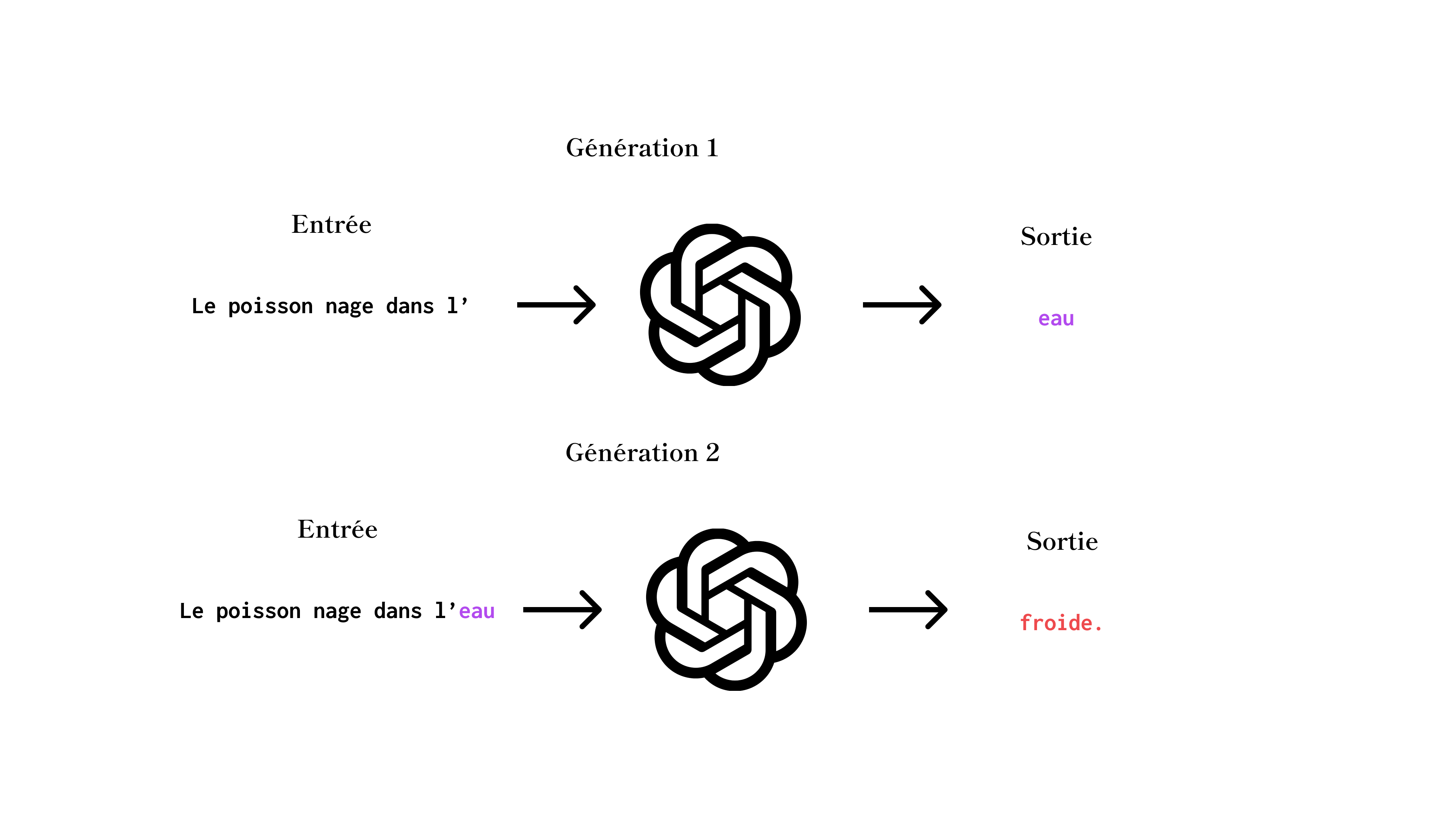
ChatGPT, Claude, Gemini are LLMs (Large Language Models). How they work is very complex, but the idea behind them is simple: from a sequence of words (more precisely tokens), the LLM predicts the next word. It repeats the operation several times to predict the entire answer.
Illustration:
Jev
Unlike LLMs, Jev does not generate text; it makes decisions. The particularity is that it is us (the user) who provide the choices. Obviously, to make a decision it needs context. We also give it the context. In the end, we give it:
- a context
- choices And Jev picks one option among the proposed choices, with a confidence score.
A picture is worth a thousand words:
Why is this revolutionary?
The first aspect is speed and cost. Jev takes a few milliseconds to make a decision, while an LLM takes several seconds to explain its choice in text. Moreover, what costs money is not Jev’s output, but its input (unlike current AIs).
The second aspect is dynamically choosing the choices.
Historically, we trained classifiers on predefined classes, and if we wanted to change the classes, we had to retrain the model from scratch.
For example, if I trained an AI to detect whether a client is satisfied or not, and my management asks me to also detect when the client is neutral. I had to restart training from scratch and add a class (the “The client is neutral” class).
With Jev, I can ask it right now to choose between “The client is satisfied” and “The client is not satisfied”, and in the next iteration we can add the choice “the client is neutral”.
How can Jev apply to the legal field?
How can “making a decision” apply to law, and what are its impacts? This is obviously a question I asked myself, knowing that I am developing a SaaS in the legal field. I will propose here a few use cases that seem relevant to me.
If you can think of use cases I might not have thought of, feel free to contact me on LinkedIn to discuss them with me.
Triaging incoming requests
Lawyers have a huge number of interactions with other departments:
- Comex
- Operations
- Clients Incoming requests can vary:
- advice
- contracts
- litigation
And this is where Jev could shine. Jev could serve as an “incoming-request triage assistant”. As input, Jev would receive the request, and we would provide it with the following questions plus their associated choices:
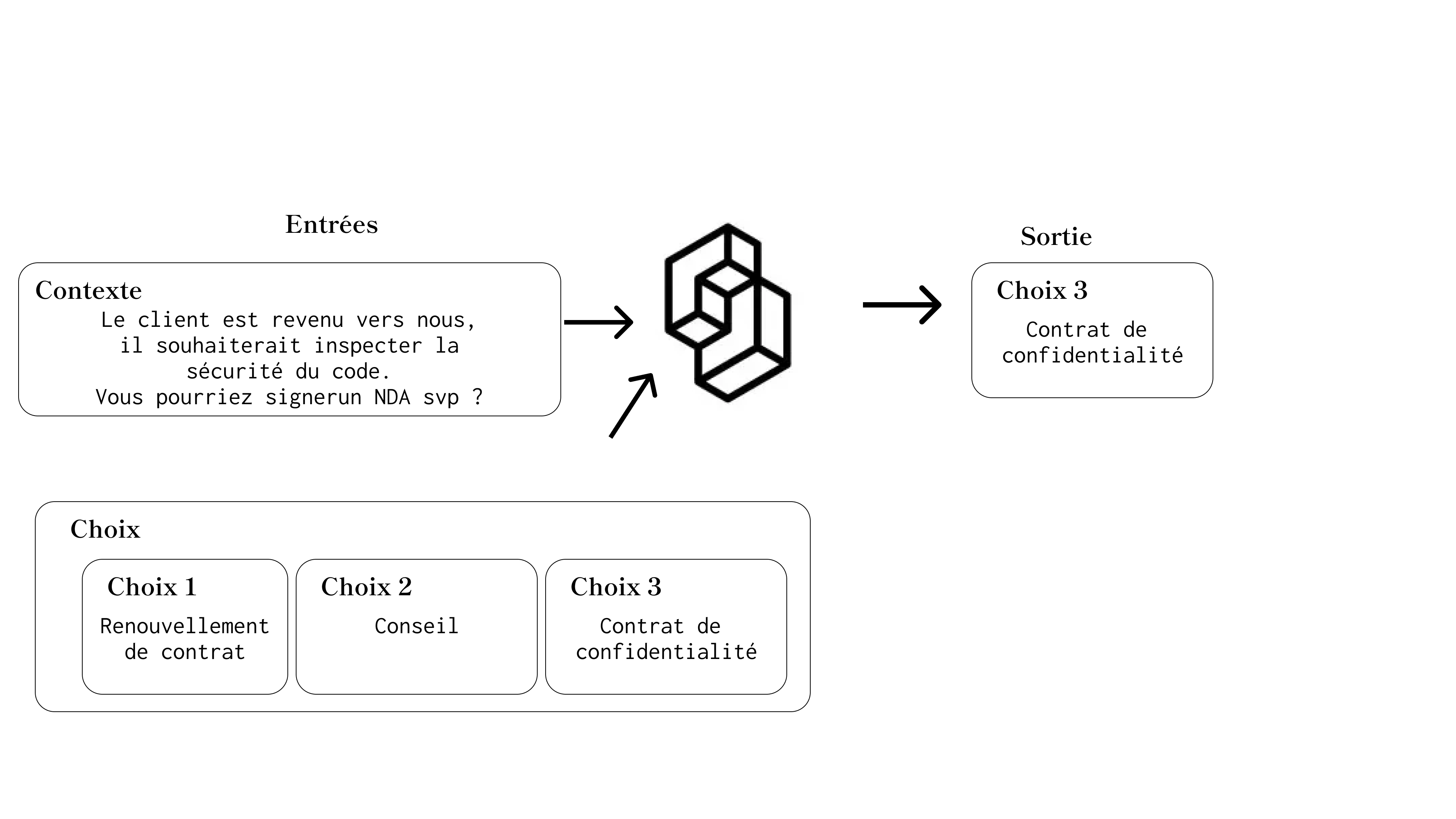
This is a task well suited to an AI, because it requires a certain intelligence. You cannot just fill in the fields by detecting patterns in the text. You need to understand the meaning of the sentence and interpret it in context to extract useful information.
Risk assessment in a contract
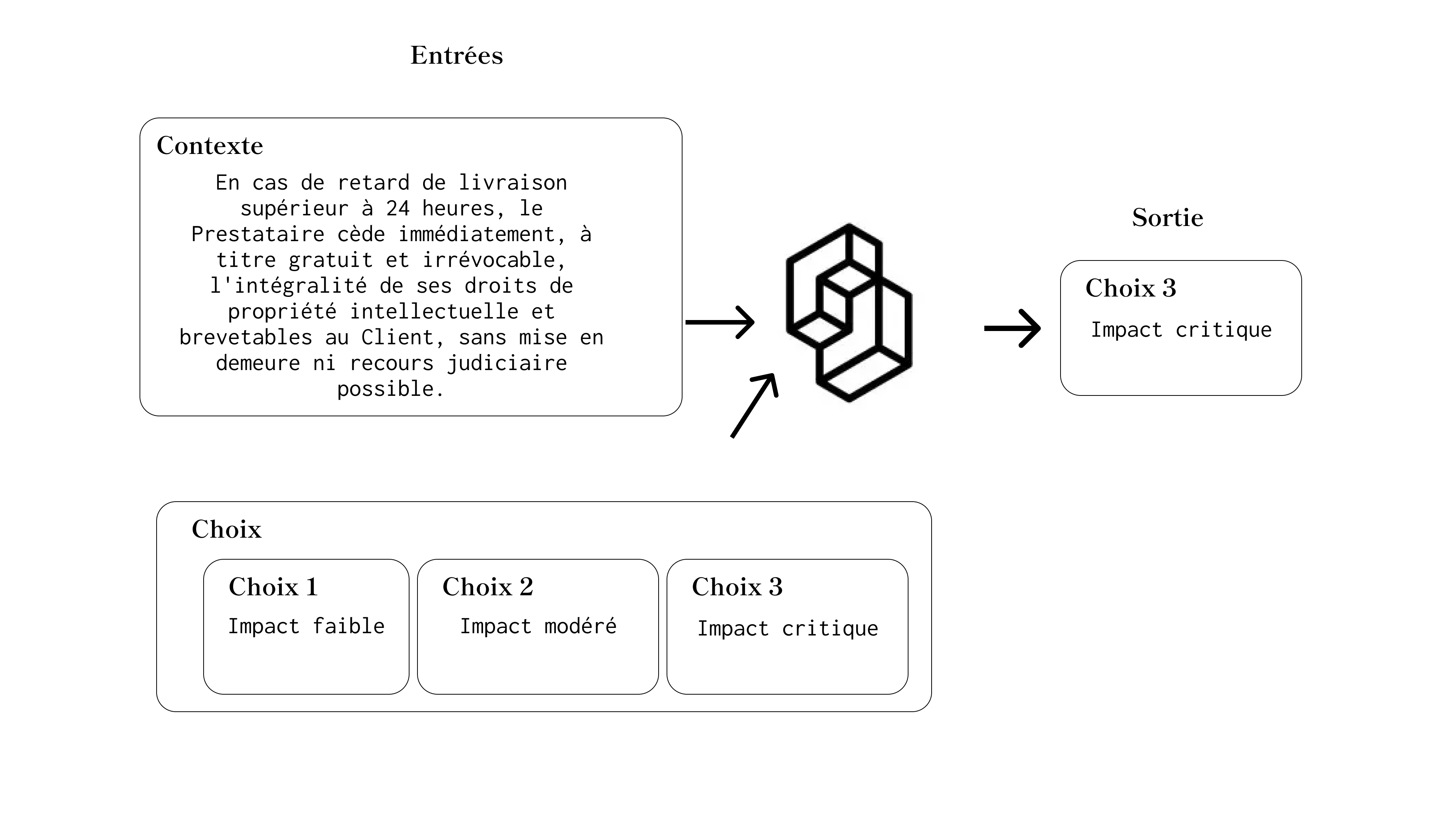
Each contract is made of clauses that govern its framework. Some clauses have a low economic and operational impact, while others are critical for the company and, in case of negligence or error, can cost the company extremely dearly.
Here, Jev could serve as a first analysis by splitting the contract into clauses and applying to each of these clauses a choice determining its criticality. The benefit for the lawyer would be to quickly get a first analysis of the contract and its clauses, to immediately identify the points to focus on.
Simplifying legal monitoring
Many lawyers complain about how time-consuming legal monitoring is. Information is very important, but effort is often spent searching for and classifying news.
The work could be greatly simplified with an AI like Jev which, from the body of the article, could classify a news feed and determine:
- the impact of a new law
- the register it falls under
- its scope
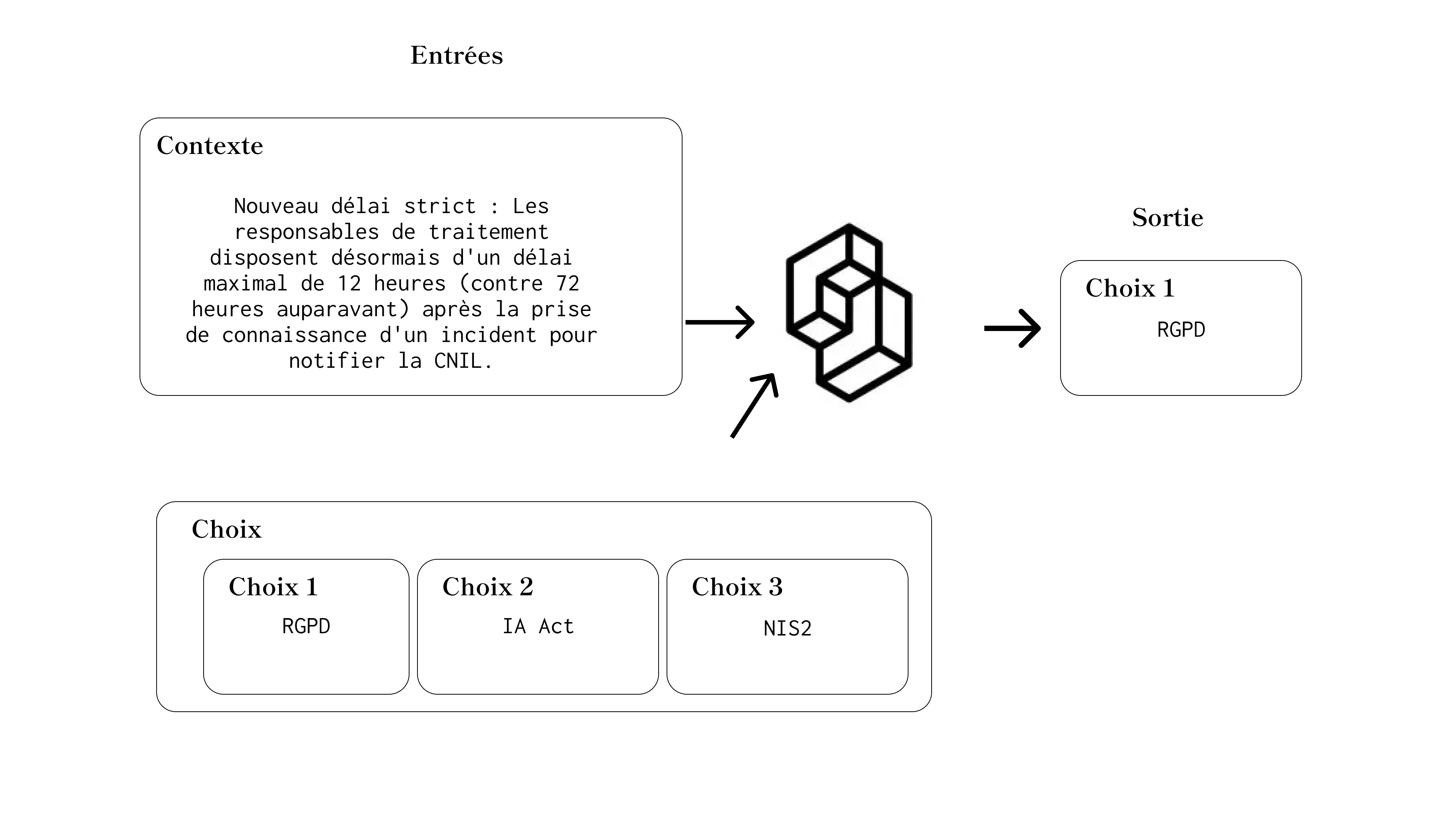
That way, a lawyer would no longer waste time searching for and classifying information, but instead spend it learning and reflecting on information at the heart of real-world expertise.
The current reality
These applications would be absolutely great if reliable. Unfortunately, reality is different today, and in this section we will discuss the limits of these applications.
Jev, a model that is still too generalist
Like any AI, Jev was trained on a generalist text corpus, not one specific to the legal world. As a result, it is not specialized at all, which can make it dangerous. More than in other fields, the impact of words is significant in the legal world. Indeed, a turn of phrase can hide a heavy applicative consequence, and a single word can sometimes completely change the meaning of a sentence. Hence the impossibility of applying it in critical processes such as clause analysis. For now, it remains at the stage of pure advisor.
Unfortunately, I do not have access to the Jev model in closed beta, but I used Laya, which is the closest open-source alternative to Jev, and the legal classification results were far from satisfactory.
The cloud model
For now, Jev is closed-source (like Claude or ChatGPT), which de facto means your data goes straight to TypeSafe AI’s American servers. You are therefore no longer sovereign over your confidential data (clauses, contracts, etc.).
The future direction
I think open-source models will develop and will make it possible to fine-tune Jev-type models, thus enabling precise and reliable business applications.
Fine-tuning is a technique that consists of taking an artificial intelligence model and specializing it in a domain by extending its training with data specialized in that domain.
Conclusion
I hope this note helped you discover and understand Jev, and inspired use cases in the legal field. If you have suggestions or remarks, feel free to come discuss them with me on LinkedIn.
This article has been translated by AI from the french handwritten version.